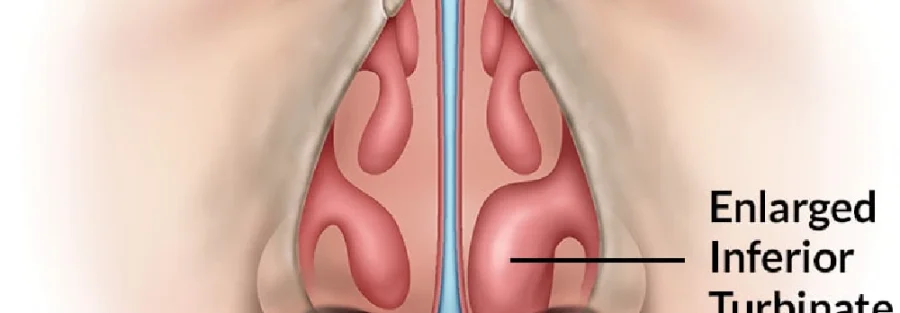
Do you struggle with chronic nasal congestion that doesn’t seem to improve with medications? If so, enlarged turbinates could be to blame.
These structures help regulate airflow and clean the air you breathe, but when swollen, they can block nasal passages, leading to symptoms like snoring and sinus infections. Turbinate reduction is a minimally invasive procedure to provide lasting relief by resizing the turbinates and restoring normal breathing.
Read on to learn more about how turbinate reduction surgery can help you breathe easier and improve your quality of life.
What is Turbinate Reduction Surgery?
Turbinate reduction surgery is a procedure aimed at reducing the size of the turbinates, which are small, bony structures inside the nose covered with soft tissue.
Turbinates help filter, warm, and humidify the air as it passes through the nasal passages. However, when the turbinates enlarge, they obstruct airflow, leading to chronic nasal congestion, difficulty breathing, snoring, and sleep apnea.
What are the Benefits of Turbinate Reduction Surgery?
The benefits of turbinate reduction include:
Improved Breathing: Reduces nasal obstruction, making it easier to breathe through the nose.
Reduced Nasal Congestion: Alleviates chronic congestion and stuffiness.
Better Sleep Quality: Can help reduce snoring and improve sleep apnea symptoms.
Enhanced Airflow: Facilitates better airflow, which can improve overall respiratory function.
Increased Comfort: Relieves discomfort and irritation caused by enlarged turbinates.
Long-Lasting Relief: Provides a lasting solution for chronic nasal congestion that doesn’t respond to other treatments.
How to Prepare for Turbinate Reduction Procedure?
Before undergoing turbinate reduction surgery, patients typically undergo a thorough evaluation, including:
Medical History Review: The surgeon reviews the patient’s medical history, including any allergies, sinus issues, or previous nasal surgeries.
Nasal Endoscopy: A nasal endoscopy involves using a small, flexible camera to examine the nasal passages and assess the degree of turbinate enlargement.
Imaging Studies: In some cases, imaging studies like a CT scan may be used to evaluate the structure of the nasal passages and sinuses.